I got dropped off on an island in Alaska with an archaeologist and told that the boat would be back for us “sometime”.
I ate ice cream in my extratufs and found a jawbone on the beach.
I took a train to a glacier and biked along the shore of a lake filled with icebergs, singing out “Heeeeeey BEAR” so that I wouldn’t get eaten.
I went on a hike with a woman I met at chainsaw class.
I drove from the Canadian border to Girdwood Alaska in 72 rage-filled hours and slept outside a hotel that was absolutely a front for the mafia.
June was a great month for adventures.
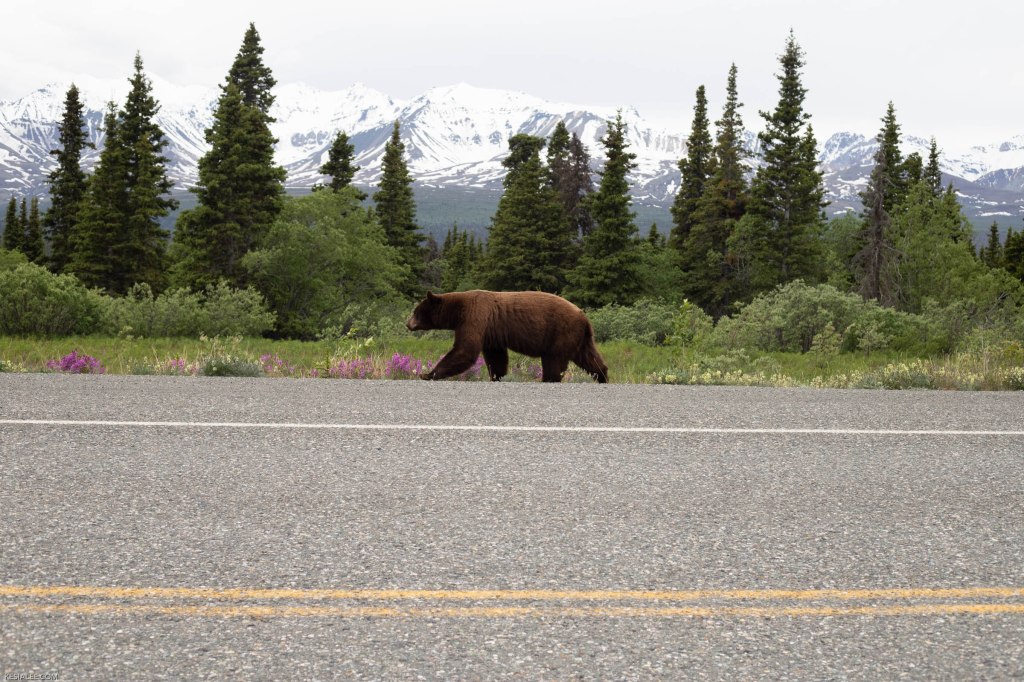
Word of the Month – Frost Heave: Large, rolling bumps in a road or path caused by underground water freezing in the winter and expanding.
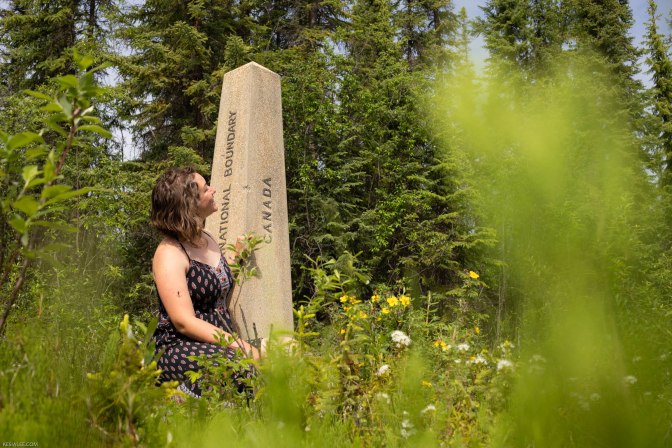
Ask anyone who drove across Canada during COVID and they will tell you about the Yukon. About how the midnight sun gave them crazed fever dreams while they were sleeping in their car. About how they got to the border only to discover they needed to check out at an unmarked building 20 miles back down the road. About how the guards on the way in scared them so bad they thought they might not be allowed back out.

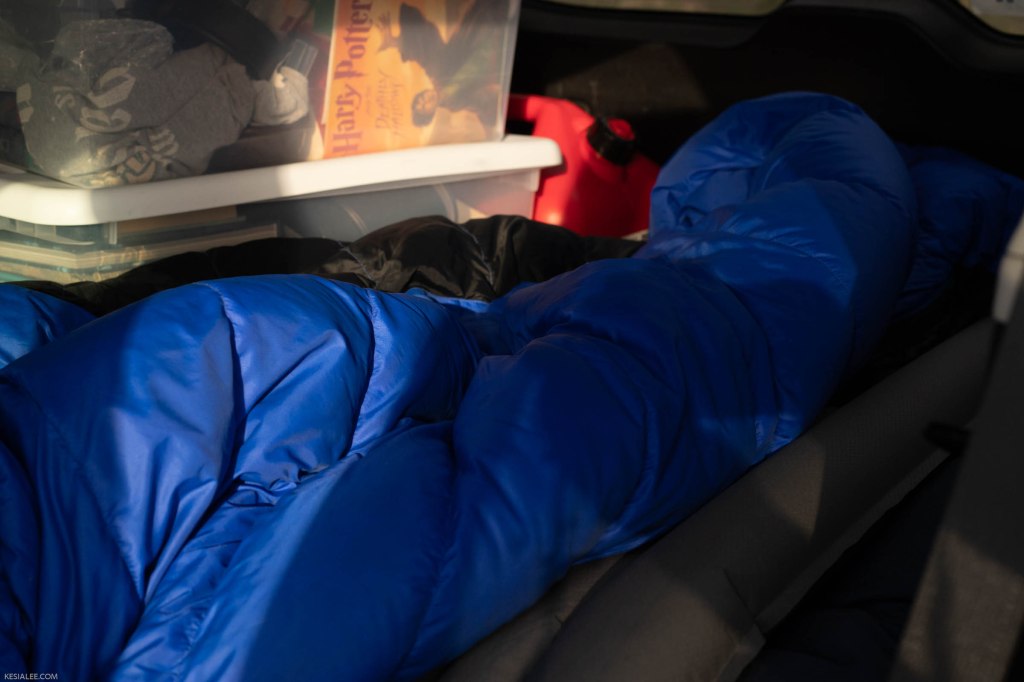
If you asked me about the drive from Seattle, WA to Girdwood, AK, I would tell you: The Yukon doesn’t believe in paving international highways. Long stretches of the road to Alaska were dust-filled gravel winding on towards to the horizon. The parts which were paved were frost heaved into oblivion. Cruising over the mounds at 80 miles an hour gave me a sinking feeling in the pit of my stomach somewhere between a speed bump and a deep-sea fishing boat plunging down the far side of a 30-foot wave. But I couldn’t slow down. The Yukon only gives you 24 hours to get across the province, otherwise they arrest you and ban you for life.
Driving 2,300 miles in three days was a crazed whirlwind of anxiety and exhaustion. When we tell the stories of the pandemic, there will be a chapter for the elite seasonal workers who decided that it was worth it. We are a ridiculous footnote in the history of the great white north.


Word of the Month – Culturally Modified Trees: Trees which carry the scars of human interaction
The best thing about being a photographer is it’s a ticket to anywhere. In this case, it was a ticket to an afternoon archaeology quest. When Jake, the archaeologist, and I arrived on the beach, the first thing I found were two tortillas laying on a rock. I excitedly exclaimed that I had found our first artifact of the day, and Jake jokingly recorded them in his fieldnotes as signs of “cultural activity”. I thought that was the most excitement we would see.
As the boat which had dropped us off vanished into the distance Jake took off running into the brush, bursting with enthusiasm. We were on the island to look for culturally modified trees. Specifically, trees which had deeps, rectangular scars in their bark. Alaskan Natives would often eat the inner layer of bark on spruce trees, called the cambium layer, but it’s a cultural practice which hasn’t been used much over the past hundred years. This meant that any scars we found were likely to be signs of human activity from 100 to 200 years ago.
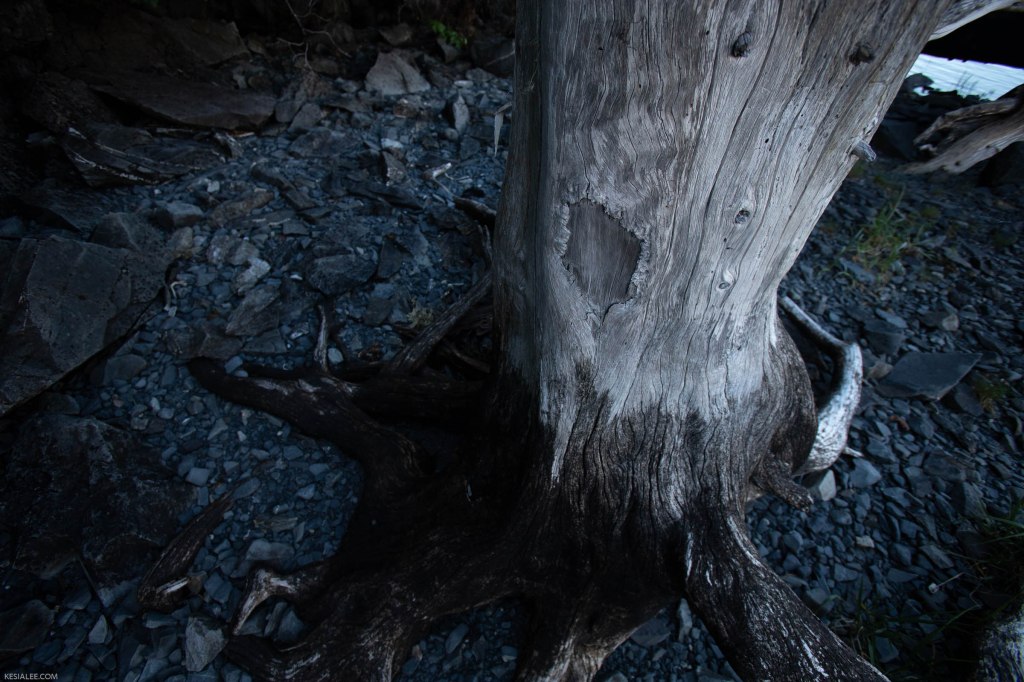
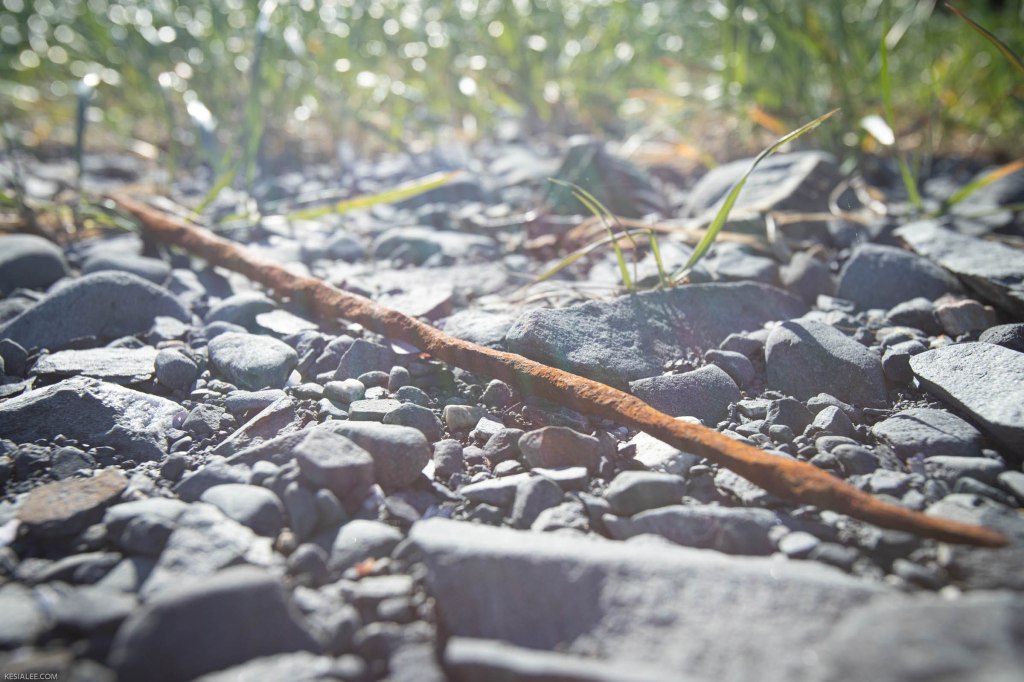

I wandered around a bit, unconvinced he would find anything. Boy was I wrong. Jake would end up running through the woods calling for me to come quick at least a dozen times. We found and documented 20 culturally modified trees, several rock rings, and a hand-forged harpoon.
When the boat came back to pick us up later than afternoon, Jake triumphantly wrapped his finds in a sweatshirt and stuffed them (along with our “cultural” tortillas) into a milk create which held all his tools.

Working with Jake changed how I think about my own work. Certainly, we are all tired of living through “unprecedented times”. It turns how that living in a history book chapter is not as sexy as I might have thought. Sometimes it looks like having a dream job while a pandemic rages on. Sometimes it looks like sleeping in the back of your car because the Canadian federal government can’t get its act together and for that you will hold a grudge for the rest of your life. Sometimes you’re just living.
Historic or not, these are the stories I am going to tell the next generation. These are the photos that will be displayed as cultural documents. As I watched Jake get excited about a piece of trash thrown away 70 years ago, or use a map designed by some faceless federal worker in 2004, I realized that my photos might bring that same joy to an archaeologist 100 years in the future. The world will be unrecognizable by then. But I hope that pieces of our experience – the seasonal workers making a mad dash across the Yukon, the trail crew working in the shadow of a glacier, the simple, sunny afternoons – will live on in my work.


 Kesia Lee
Awesome post, Kesia! I could “hear” you!
LikeLike