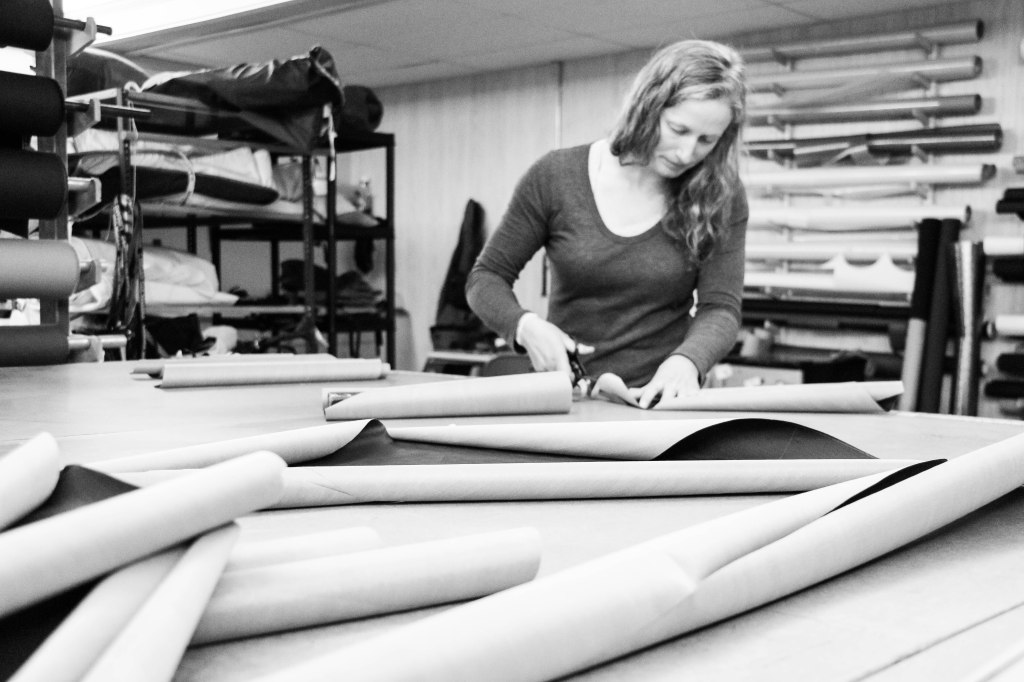
Over the past two weeks I have had the pleasure of working with Hilary Neevel, the owner of Skookum Sail Repair. Hilary and I had never met before the day I walked into her shop, introduced myself, and asked if I could use her as a subject for my photo essay.
She seemed a little confused, as most people do when confronted with my photography assignments, but to her ever lasting credit she said yes.

We agreed on a time and exchanged emails. I came back a few days latter, armed with a camera and a notepad, but not really sure how to proceed. It was strange for me to remember that although she was 20 years my senior with grey hair and a self sustaining business I was the one in charge of the situation. I had to force myself to get up close in order to get the shots I needed and to keep up a constant stream of questions.
But she was great to work with. She was willing to talk about all aspects of her work, her past, her goals, and everything in between. I was in her shop for about an hour or two at a time, photographing whatever she happened to be working on that day. We talked while she worked and I photographed. Whenever I felt that I had run out of questions or content I called it a day and went home to edit my take.
The Skookum sail loft is located in an alleyway behind the Bellingham Farmer’s Market. I noticed it when I was first exploring the downtown area during the early weeks of school and as a sailing addict I have kept it in the back of my head ever since.
 Neevel started the loft a few years ago, it was the only one in Bellingham at the time. She stumbled into sail repair almost accidentally. She started at a loft in Fairhaven as a filler job out of college, she knew nothing about sailing and nothing about sewing, but it turned out she loved working with her hands. She’s been working with sails ever since. When the Fairhaven loft shut down a while back, Neevel used left over parts and customers to start her own business.
Since then several new lofts have begun in Bellingham but Neevel said that hasn’t effecter her business much. She has built up a loyal customer base in the area. They come to her because she only does sail repair, not sail manufacture, so they know that she will fix the problem without trying to sell them a whole new sail.

When I walked into the sail loft of Friday, Neevel was working on a 50 ft sail from a local customer. The monstrosity nearly swallowed her whole as she threaded it through one of her three industrial sewing machines. She said that she likes the feel of her big sewing machines but that she can’t get the hang of small, flimsy, home ones.
“Sometimes my friends ask me to hem their pans or something for them and I say, ‘You don’t want me to do that, I’ll just botch them up!’” Neevel laughingly told me one day.
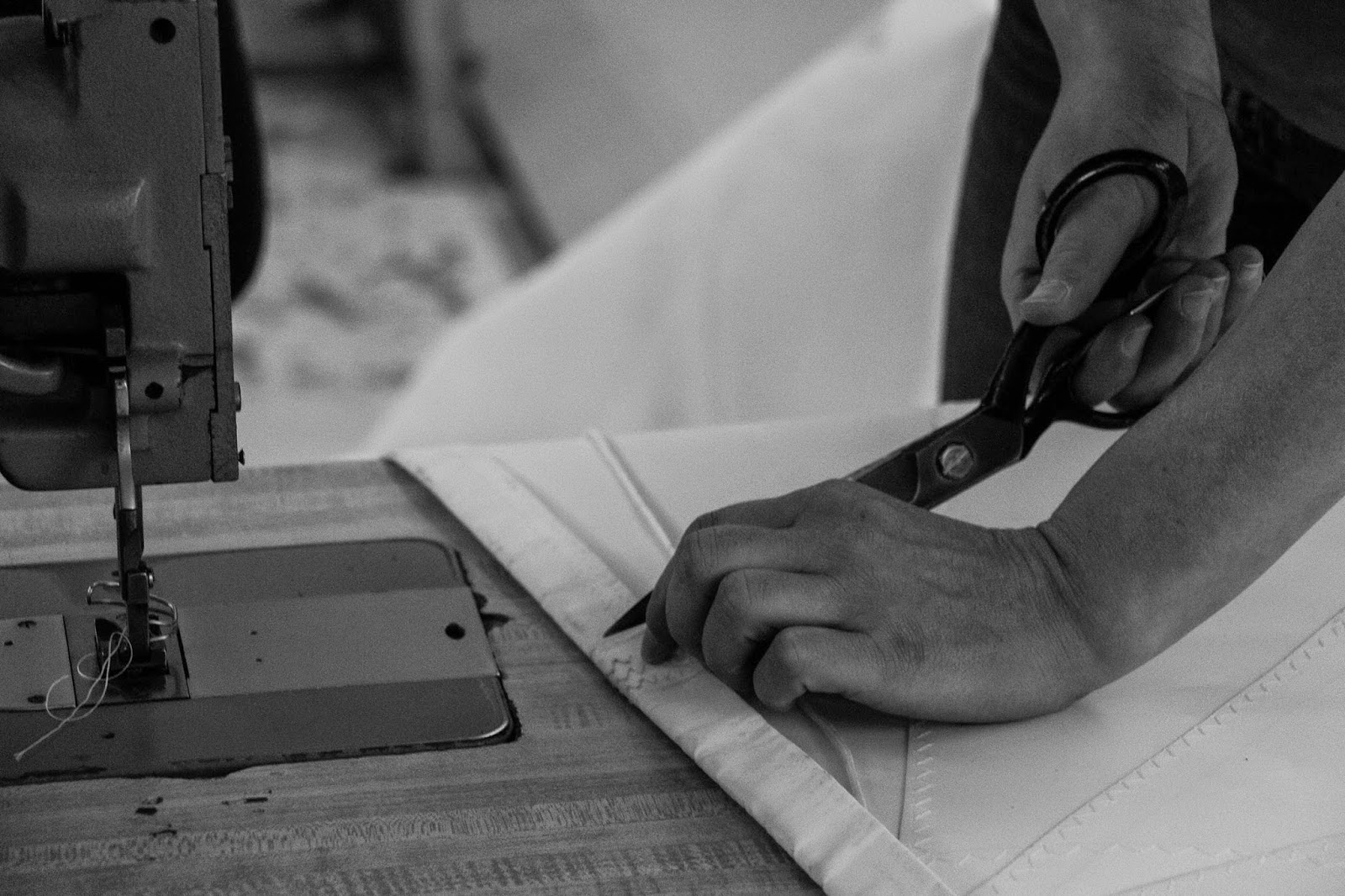 But other than her three sewing machines, she works mostly with an assortment of hand tools. She said that one of her biggest struggles running the business is learning to invest in high performance, expensive tools. She prides herself in being able to make do with what she has even when she knows that better tools might make certain jobs easier.
I told her I could relate to that struggle. Camera equipment, like sail repair, is not cheap. And it’s hard for me to let go of huge amounts of money for an accessory I can make do without.
During one day I was there Neevel needed to put some new reefing lines on a customers sail. Part of the process involved knocking several new holes in the canvas and installing grommets, large metal rings, around the edges.

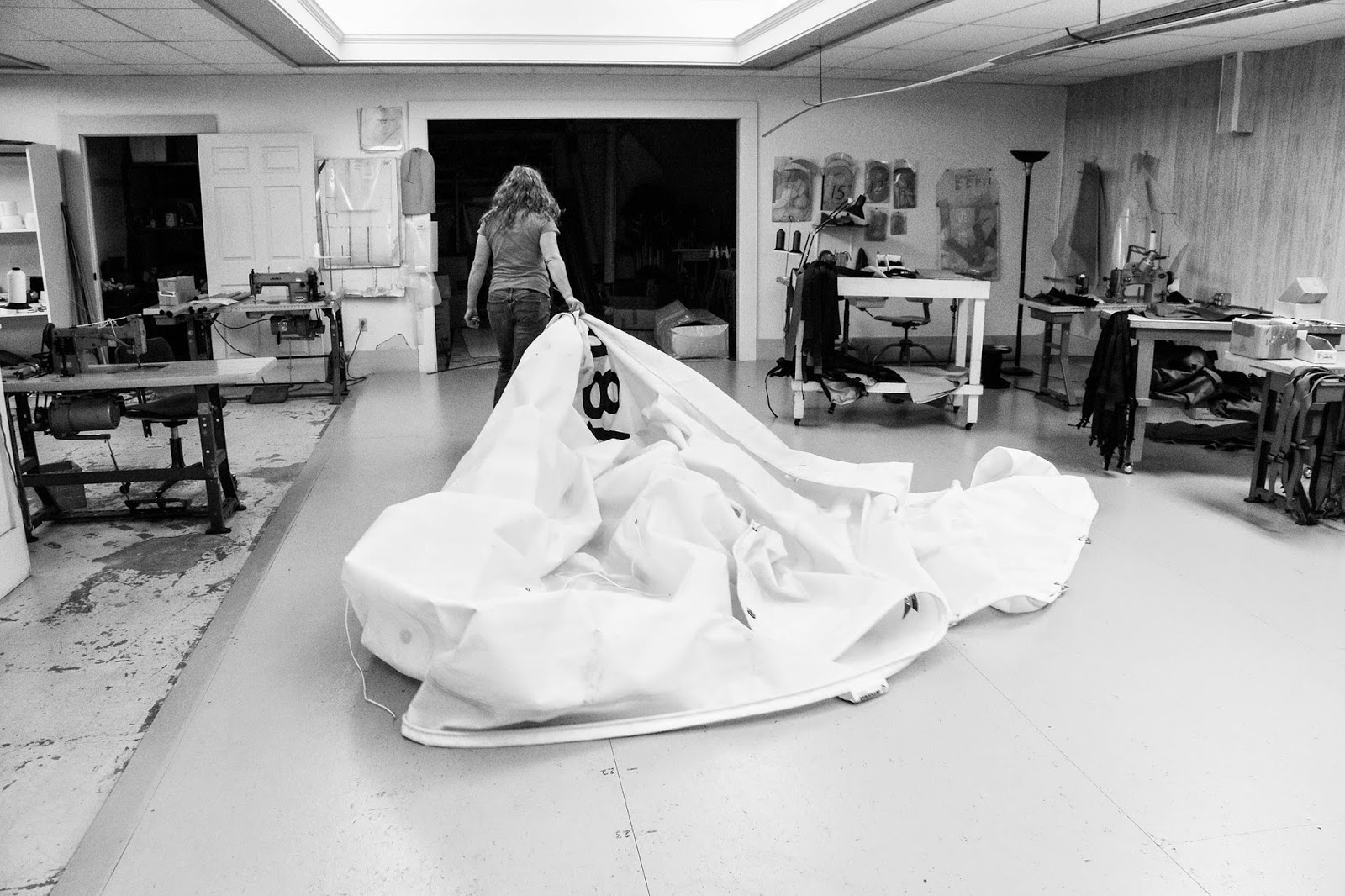
She drug the full sail across the floor of her loft, over to a small bench where she kept all of the hardware. She had to wrestle the sail around a bit in order to get it settled into a working position. She then spend several meticulous minutes fiddling around to find just the right grommet and place it just so.
After she had situated things to her liking she pulled out a large punch and a rubber mallet. She would place the punch wherever she needed a new hole, gripe it tightly, and whack it several times with the mallet. I’m sure there are tools to make that process easier, but she obviously had a system which she made work for her.
She similarly installed the metal grommets with a series of hand tools. She used crimps and many others which I would name if I knew what they were called.
When she was done there were several new holes ringed with steel, looking for all the world as if they had always been there.
During this process there were at least two times when Neevel forgot something or needed to use a different tool across the loft. Every time that happened she had to get up and drag the sail across the floor. She told me that wrangling the sail is the most physically exhausting part of her day to day work.
Because sailing is largely a summer sport, the traffic through Skookum Sail Repair is more consistent in the summer and slower in the winter. To compensate for this seasonal flux, Neevel runs two business out of her sail loft in downtown Bellingham. The first is Skookum Sail Repair and the second is Pack NW.
 Pack NW is an outdoor bag manufacturing company which Neevel created a few years ago. She started by making carrier bags to fit on the back of the bike which she rides to work every day. She fiddled with the design and the material until she felt that she had a design good enough to sell. I asked her how long that took and she said it was about four years before she had a design she felt that she could sell. She admitted that being a perfectionist can sometimes be an issue, it means that everything takes twice as long as it should before she feels that she has done it right.
Neevel is meticulously involved in every step of the process for these bags. She creates each design herself on scrap pieces of paper which she keeps in a large three ring binder. Her plans are detailed, intricate, and full of far more math than I would ever have the patients for.
Once she has a design mapped out on paper she transfers it over to a scale plastic template. All of the lines are cut out of a large mat so that she can trace them directly onto the material she is working with that day.
The fabrics which she uses are derivatives of sailcloth, and often produced by the same companies which she purchases supplies from for her sail repairs. When I asked her what the hardest part about bag making was she said that it was getting her hands on the material she needs. This was as much of a surprise for her as it was for me.
 Apparently there are a million un written rules about purchasing material. Neevel said she still hasn’t figured all of them out.
Producers are inexplicably picky about picking up new customers, divulging information, or supplying the right product. Neevel said she hadn’t expected this to be as much of an issue as it is. She laughed at the strange social mores, saying she still doesn’t understand them all.
While we were talking she was busy cutting away at the white pencil lines which crisscrossed the dull grey-green fabric. It was like watching a butcher divide up a cow on a chalkboard. Her hands moved autonomously as she chatted about her struggles. It was obvious that she had done this hundreds of times before. Every time she cut a new section free it sprung into a tightly wound roll and sat waiting on the table. Soon her work bench, which had been covered in a single sheet of cloth, was filled with 20 or 30 little rolls of fabric scattered every which way. When she was done she gathered them up and sorted them into piles without even unrolling most of them. She seemed simply to know what each one was due to course of habit.
And on the other side of the room you could see where the dozens of rolls of fabric magically turned into bags.

Neevel said that most people who work with industrial sewing machines end up obsessed with bags at one point or another. She couldn’t explain exactly what it was, just that there was “something” about making bags which drew her in. To me it just looked like an awful lot of small detail waiting to get messed up. But she had an amazing handle on it. I guess that’s what happens when you get paid to not mess up the small details.

And finally, the finished product. It was great to spend some time with sails again and to get to know a very strong and competent business woman. If you would like to visit either of her websites I’ve included links below. I encourage you to check them out. The bags are just plain cool and you never know when you might need a good sail repair contact.
Skookum Sail Repair: http://skookumsailrepair.com/
Pack NW: http://packnw.com/


Leave a comment