As I headed out to photograph my third protest in as many months, a minister friend of mine pointed out the beautiful symbolism of having a No Kings march on the weekend of Palm Sunday. She said it delighted the church geek in her because Palm Sunday, when Jesus rode triumphantly into Jerusalem, had protest and parody vibes all its own as the people called out against Roman oppression. In some ways, Palm Sunday was a No Kings march as well.
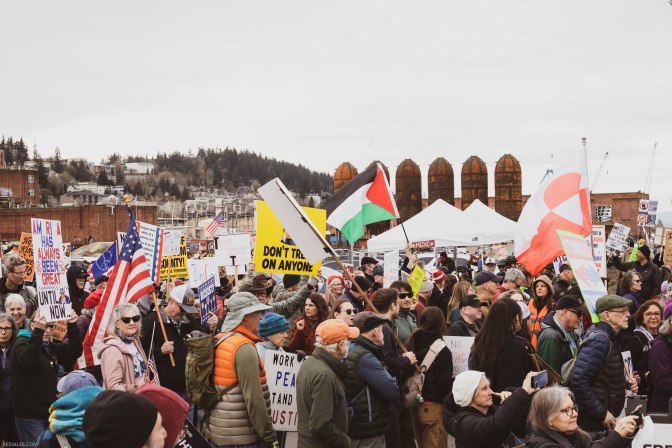
On an afternoon in early spring teeming with possibility, a large crowd gathered to cheer and chant and sing. They were fed up with the all-consuming empire which seemed intent on eating the world. Individually they were powerless, but as a choking, chaotic mass they were undeniable. Showing up in the street was a public demand for change. They waved flags and declared that a better world was possible. In that moment, it almost felt as though that were true.
That is the scene described in Matthew 21, and it was the scene I was met with when I arrived to see thousands of people clogging downtown Bellingham. The parallels were as undeniable as the cries for change.
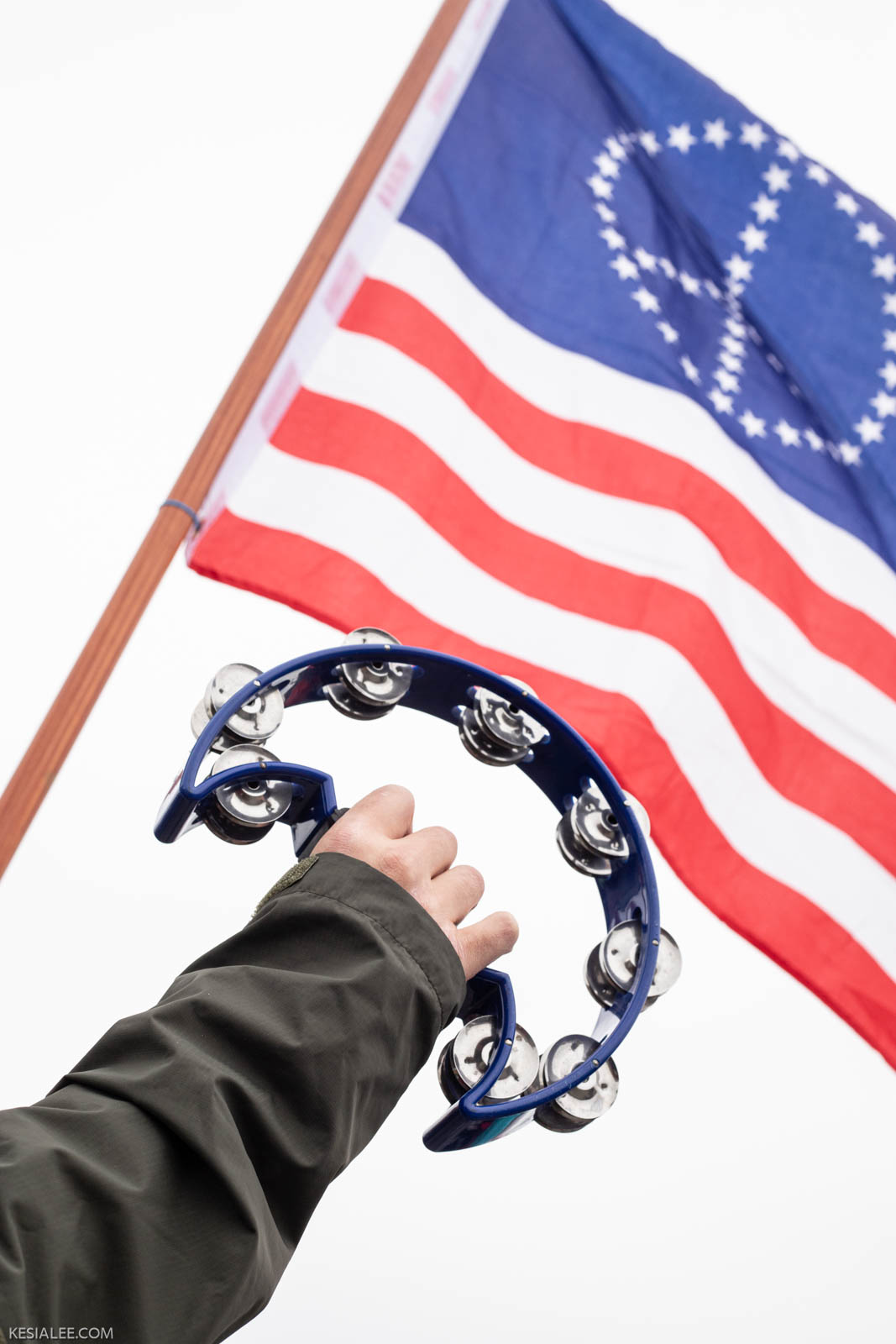
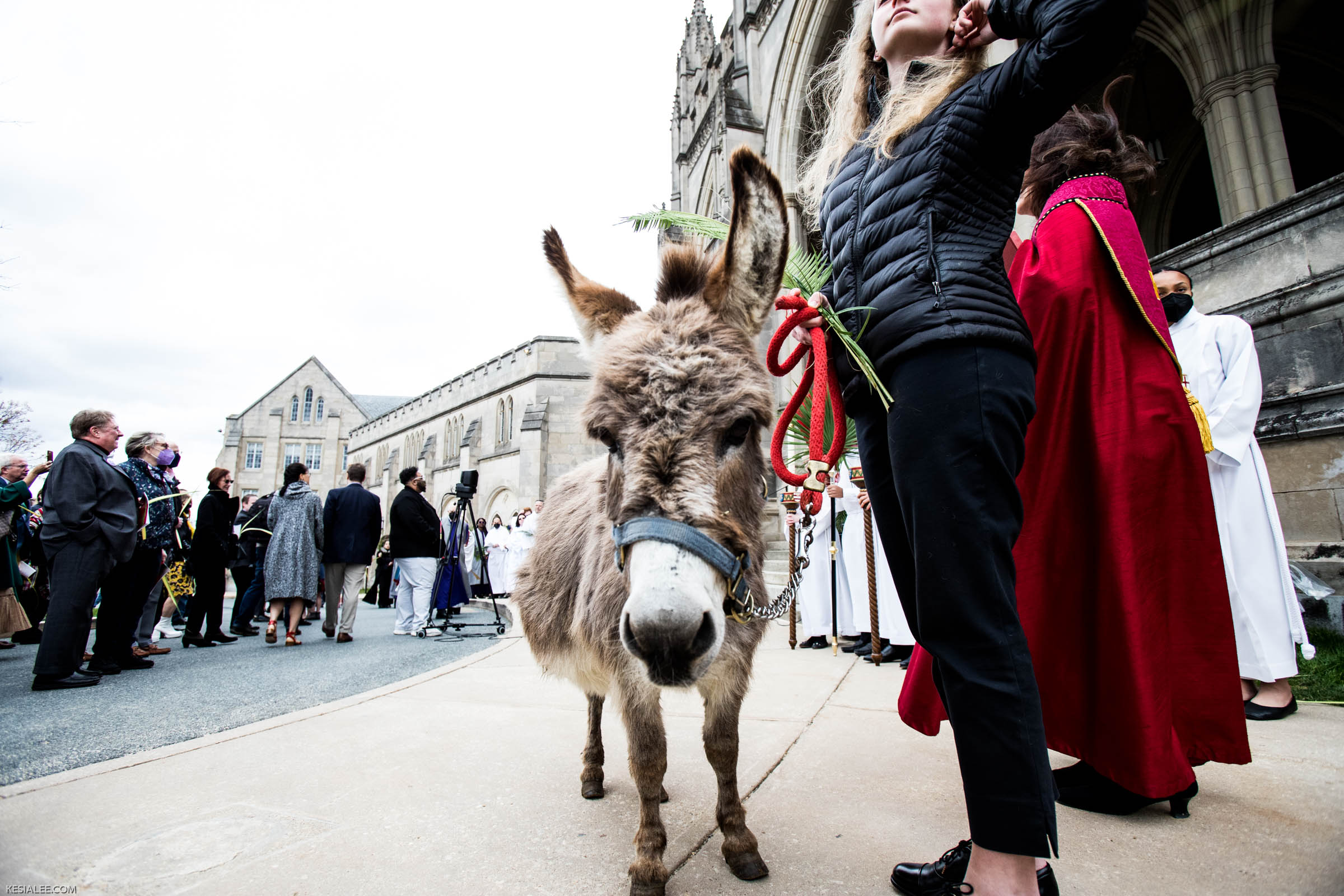
At the end of the march, I walked by several punk artists painting a car like a Slavic Easter egg. As I passed middle-aged man in a patch-covered denim jacket I heard him say: “That’s the thing about Christianity. Like, I don’t believe the story, but I believe in the story, ya know?”
And I do know. I love the story too.
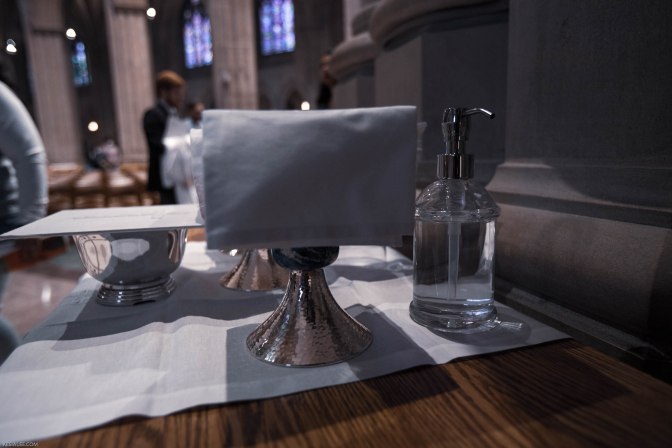
The story of Easter and Holy Week has been lived throughout history, time and time again. The heroic march against empire, power, and corruption. The temporary coming together of all the downtrodden and oppressed in one swelling mass which cries out in the streets. The triumphant belief that you can stop the cycle.
And then the cycle rolls right over you anyways.
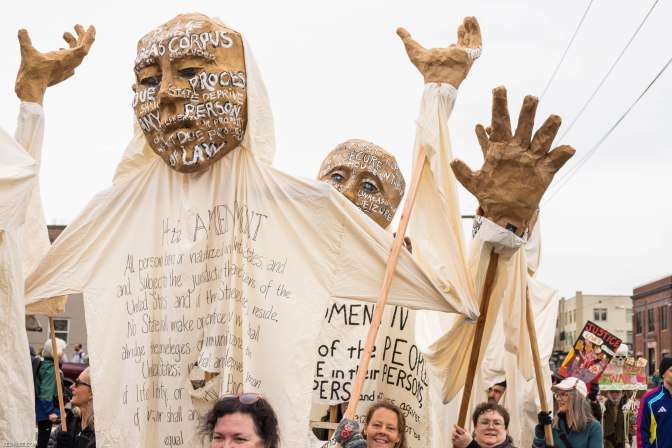
As I watched the No Kings march stream past me, I wondered what it would have been like to be in the Palm Sunday crowd and believe that this was going to change everything. It’s been a long time since I felt that hopeful. Weighed down by ICE in the streets, a war in Iran, voting rights under threat, gas prices at $5.76, and rent in my town having increased by 70% in the last decade, it was hard to believe that waving some cardboard signs was going to fix anything. And the protesters in the processional in 33 a.d. probably felt the same way about their palm fronds. After all, just a week later their messiah would be killed. So, what was the point of the parade?
But next comes the part which makes me love the story. Because politics was never the point.
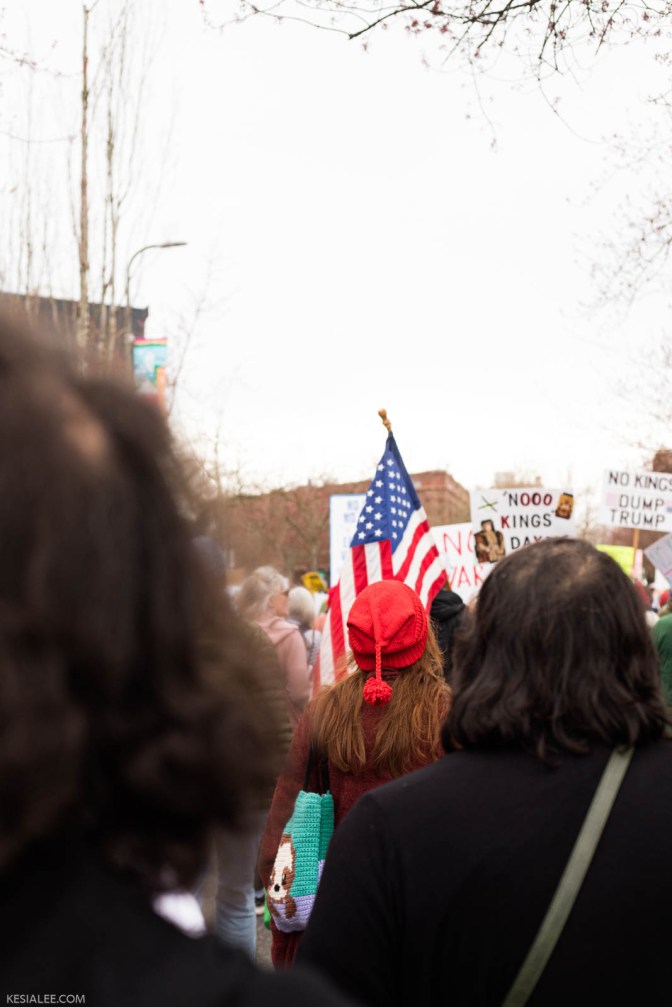
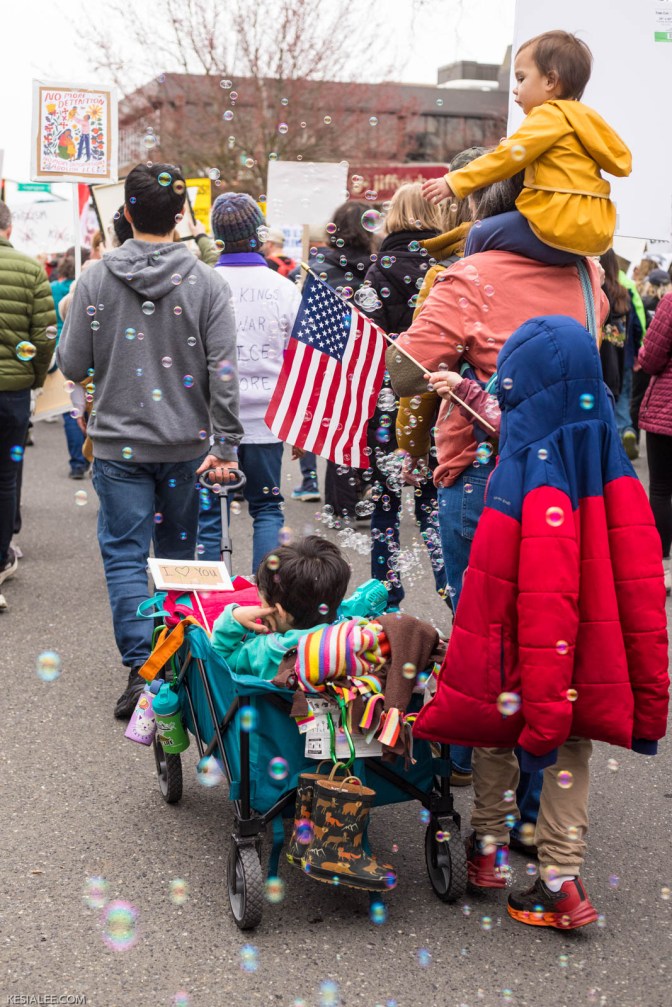
At the protest, I saw multiple people I knew from all different parts of my life. I watched as a man spotted his grade-school teacher and giddily introduce her to his wife who exclaimed, “He still talks about you all the time!” I saw people volunteering to direct traffic, I saw others handing out cornbread and picking up trash. In short, I saw a community come together and remember how to take care of each other while marching towards a common goal.
Palm Sunday didn’t topple the Roman Empire. No Kings won’t stop the expansion of the American one. The cycles of power so often roll right over us, leaving us depressed and scattered. But on the third day the people rise, again, and again, and again. Demanding community, self-governance, and a better world for all.
Empires fall. They always do.
Communities endure.
And sometimes their messages echo on to us across the eons.

 Kesia Lee